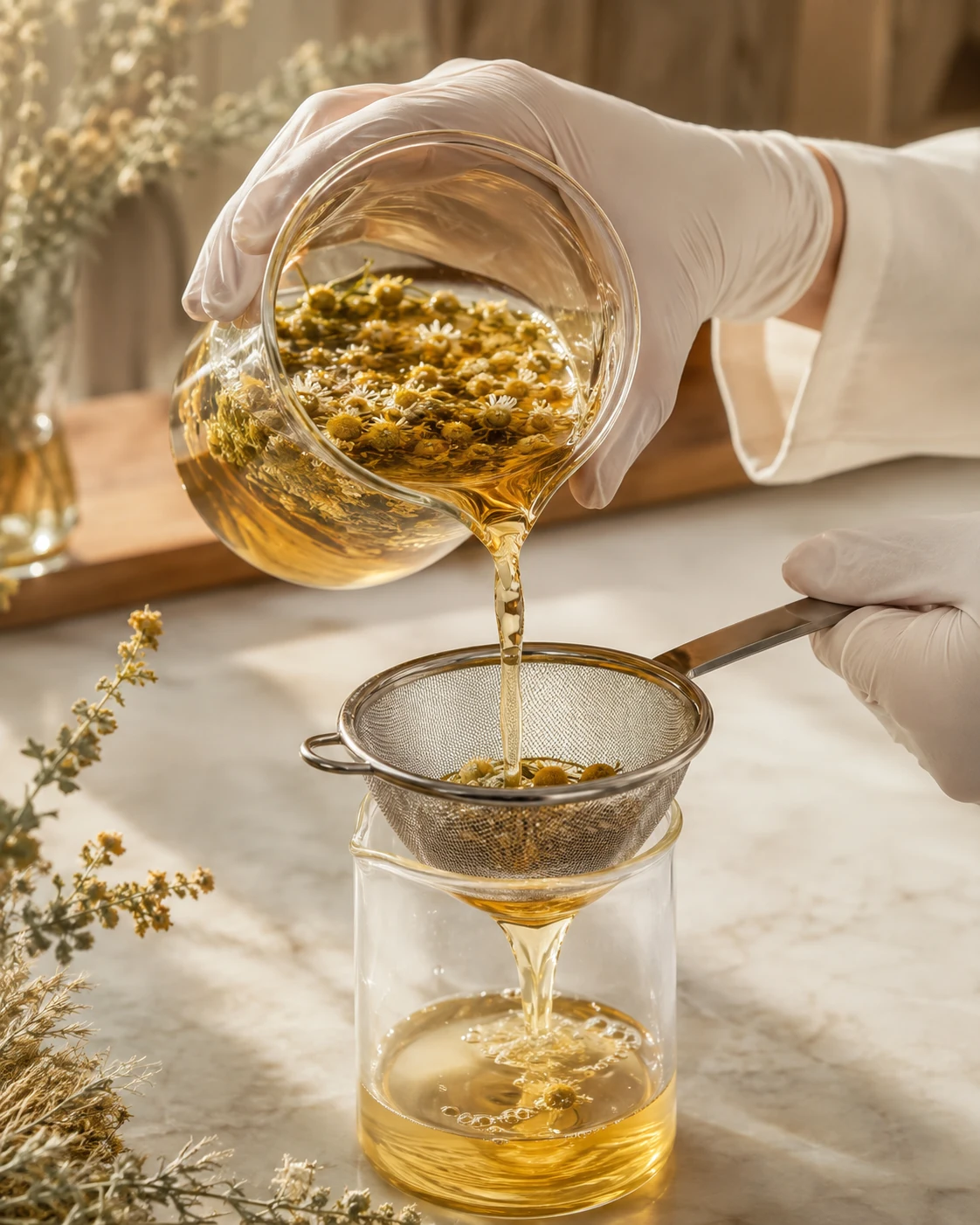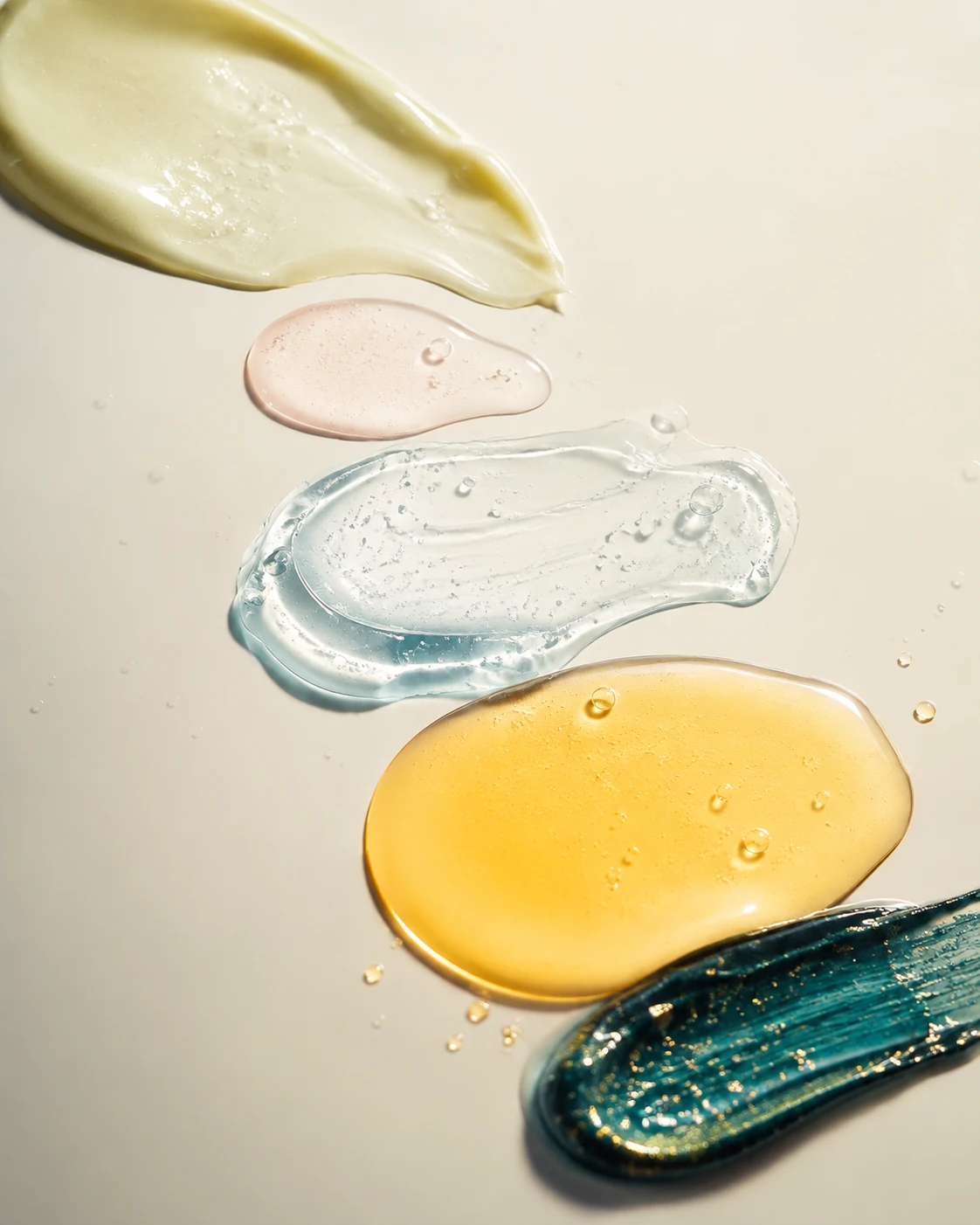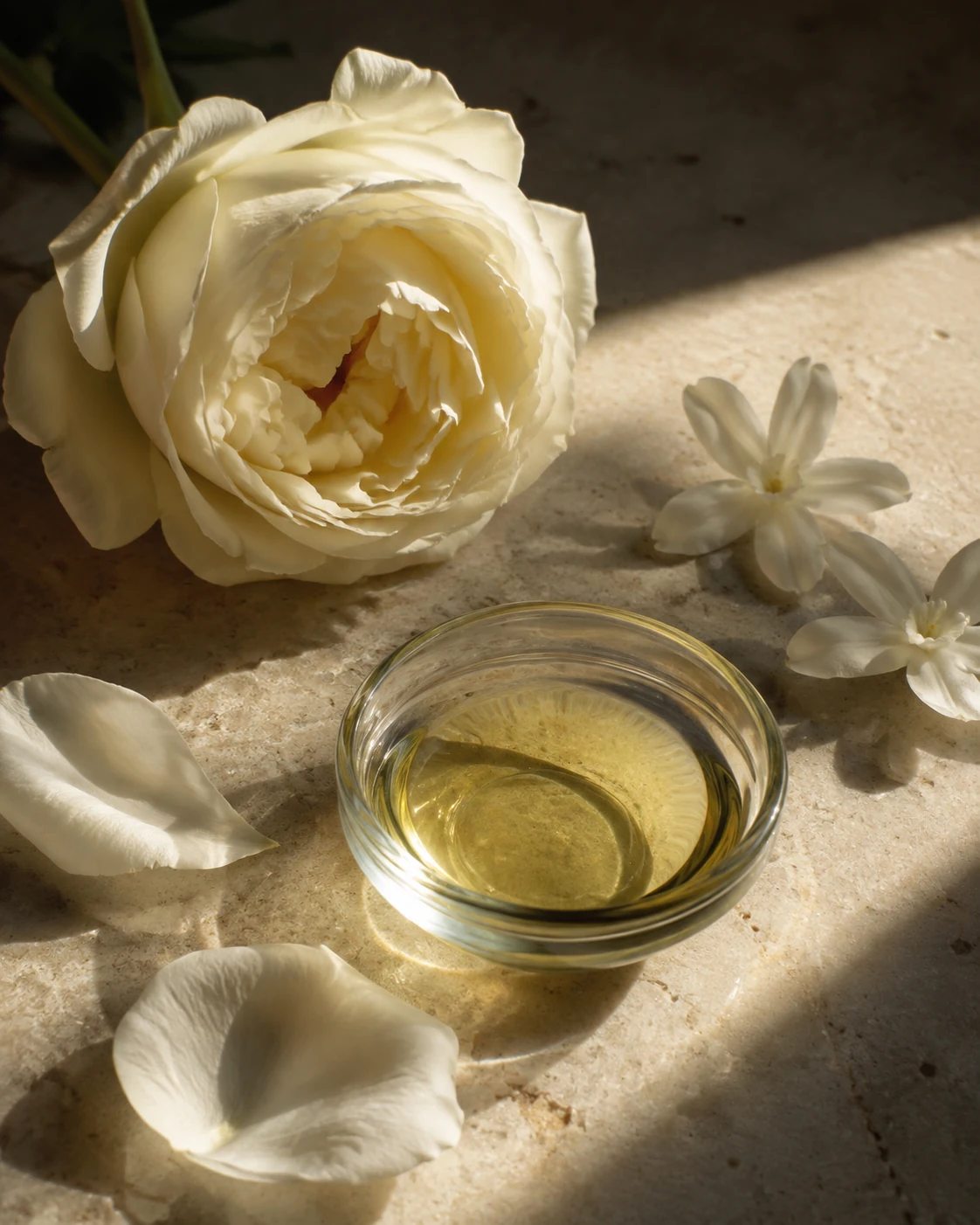
Unscrew a cap and, for a moment, the bathroom changes. Lemon recalls freshly cut peel, rose a garden after rain, and Blue Tansy brings a herbal note that some people love while others need time to appreciate. Before the texture touches the skin, our sense of smell is already deciding whether we want to move closer to the product.
Olfactory information travels to areas of the brain closely connected with emotion and memory. A familiar scent can therefore bring back a scene with surprising speed. A cosmetic ritual can use this connection as a repeated signal: morning is beginning, evening is ending. There is no need to turn it into treatment for the nervous system.
Scent from raw materials and added fragrance
A product can smell for several reasons. Some base ingredients have an aroma of their own. Fragrant botanical oils or a fragrance composition may be added to the formula. Sometimes ingredients are used to mask the smell of the base instead.
‘No synthetic fragrance’ does not automatically mean ‘no fragrance ingredients’. Essential oils and aromatic plant extracts are mixtures of volatile molecules. They can be natural in origin while also containing substances that European legislation requires to be declared as fragrance allergens under certain conditions.
An accurate public claim must match the INCI list. If a product contains Parfum, essential oils or aromatic extracts, its scent cannot simply be described as an incidental trace of the base ingredients without verification.
Natural scent is not a safety guarantee
A citrus, floral or herbal origin sounds gentler than a laboratory name. The immune system, however, does not recognise marketing categories. A sensitive person may react to natural fragrance ingredients just as they may to other allergens.
This does not mean that every fragrance is a problem. It means that tolerance is individual and the brand should make the full composition available. Someone with a confirmed contact allergy needs specific ingredient names, not reassurance that the composition is ‘clean’.
Irritation and allergy are also different. A high dose of an aromatic ingredient can sting irritated skin without an allergic reaction being involved. Repeated itching, swelling or a rash calls for stopping use and, where appropriate, professional assessment.
‘Fragrance-free’ and ‘unscented’ are not the same
Fragrance-free usually refers to the absence of added fragrance ingredients, while unscented may mean that a product has no perceptible scent, sometimes thanks to substances that mask odour. Meanings can vary by market and regulation. If you have a known sensitivity, reading the complete INCI list is therefore more reliable than relying on a single word on the front.
A botanical product can also have a natural scent without conventional perfume. ‘Without added fragrance’ need not mean ‘without any aroma’.
When scent varies slightly between batches
Natural raw materials can show subtle sensory differences depending on harvest, origin and processing. The manufacturer must nevertheless define an acceptable range. A marked change, a rancid note or an unusual smell is not romantic proof of nature. It may indicate ageing oils, unsuitable storage or another problem.
A customer’s sense of smell does not replace stability testing. It can, however, signal that a product is behaving differently from usual. In that case, contact the brand with the batch number.
How to enjoy scent without pseudoscience
A single breath from your palms can slow down an evening application. A familiar scent may help separate work from rest and make consistency more enjoyable. A cosmetic product cannot, however, be promised to treat anxiety, balance hormones or guarantee sleep.
Sensory language is rich enough without health claims. A scent can be green, citrusy, floral, earthy, cool in character or resinous. It can unfold during application and fade after a while. These observations help the reader imagine the product more accurately.
Scent does not need to be justified by an effect it does not have. Giving a texture character, creating a memory and turning an ordinary application into an anticipated moment can be enough.
Scent memory does not need grand promises
A scent easily becomes associated with a repeated situation. The same note released every evening when opening a balm may eventually recall the bathroom, warm palms and the end of the day. That does not mean cosmetics treat stress or control hormones. It means smell works closely with memory and emotion, and a regular sensory cue can become a personal marker of a particular moment.
This connection is individual. Lavender is not calming for everyone, and citrus is not automatically invigorating. A botanical scent might remind one woman of a garden, another of a pharmacy, while a third simply dislikes it. Copy should not prescribe an emotion as a guaranteed effect. Describing the character is more precise: dry, green, spicy, floral, resinous or gently earthy.
Perception changes during use too. The first opening tends to feel most intense because the brain notices novelty. After a few minutes, olfactory adaptation makes the scent less noticeable even though it has not disappeared from the surroundings. There is no need to apply more product because of this. Heavy layering of scented skincare, perfume and haircare can instead create an overwhelming combination.
It is entirely legitimate for someone with sensitive skin to want a fragrance-free product. Texture, the warmth of the palms, quiet or beautiful packaging can also create a sensory ritual. Scent is one route to an experience, not a ticket without which care has no value.
Do not assess the scent directly from the bottle neck as though it were perfume. The finished product may smell softer or different after it is spread and warmed on the skin. When testing tolerance, do not apply a large dose simply to smell it more clearly. Olfactory impression and skin tolerance are separate questions, and each deserves its own pace.
How the products’ sensory character is created