Two similar-sounding ideas easily meet on a morning shelf: protection and care. An antioxidant serum protects against external influences; sunscreen protects against UV radiation. In everyday speech they sound almost identical. In cosmetics, the difference is fundamental.
SPF is neither an ingredient nor a sensation on the skin. It is a value obtained by standardised testing of a finished product. It mainly describes protection against UVB radiation, which is associated with sunburn. A broad-spectrum label adds information about UVA coverage. A serum without a declared, tested SPF does not perform this function, however prized its antioxidants, oils or botanical extracts may be.
An antioxidant is not an invisible parasol
Antioxidants serve several purposes in cosmetics. Some help stabilise an oil formula; others contribute to care for the skin's appearance. They can complement a well-planned morning routine, but cannot create an even, tested film of UV filters.
The amount matters too. A serum is usually applied in a few drops. Sunscreen must form a continuous layer in an amount consistent with its testing. Trying to achieve a comparable layer with oil serum would result in a greasy face, not reliable UV protection.
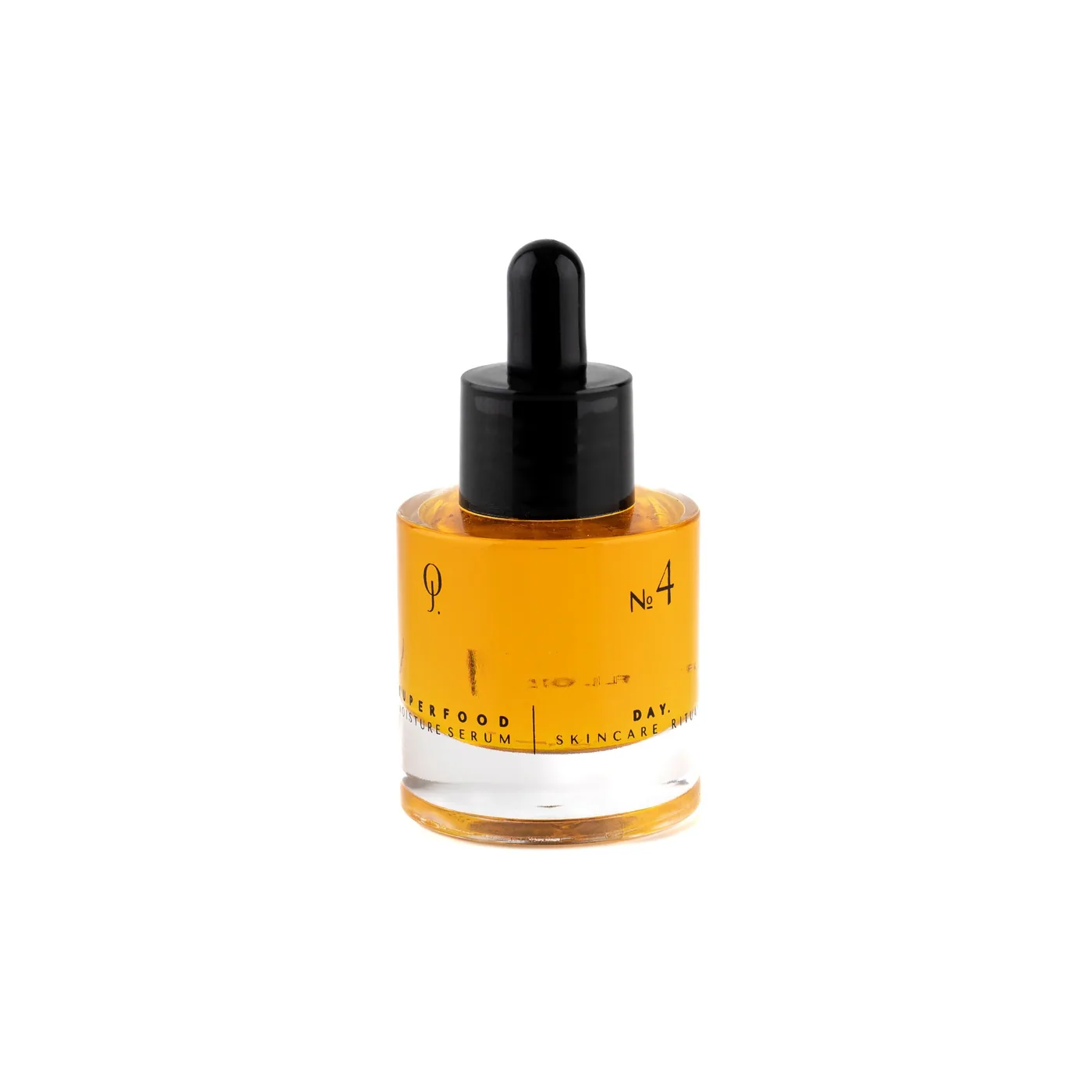
No4. Daily Superfood Moisture Serum
Explore productClouds do not mean no exposure
UV radiation does not behave like visible sunshine. Clouds can reduce its intensity but do not automatically eliminate exposure. UVA is also associated with long-term changes in skin appearance, and part of its spectrum passes through ordinary window glass. Exposure depends on season, location, duration and whether you sit deep inside a room or beside a window for hours.
There is no need to turn every step into an anxious ritual. It is simply useful to understand why serum and sunscreen are not interchangeable. One provides care; the other has a declared protective function.
The morning sequence
A practical routine might look like this:
- gentle cleansing,
- toner or a water-based layer,
- hydrating serum,
- a small amount of daytime oil serum,
- a separate broad-spectrum sunscreen,
- make-up.
If sunscreen pills over serum, less oil, shorter rubbing and a few moments for the layers to settle often help. Do not mix serum directly into sunscreen in your palm. Diluting or disturbing an even layer may change how the sunscreen behaves on your skin.
Amount is the weak point in many routines
People generally apply too little sunscreen, not too much. Practical measuring guides vary with packaging and face size. What matters is an even layer across the whole face, ears and exposed neck, following the particular product's instructions. Reapply during longer periods outdoors, especially after sweating, swimming or wiping.
Sunscreen is not permission for unlimited time in the sun. Shade, clothing, a hat and sensible timing remain part of protection. The number on the packaging does not tell you how many times longer you can sunbathe: radiation intensity and your behaviour also affect exposure.
When sunscreen feels uncomfortable
The best sunscreen is not the one with the most appealing filter list that stays in the bathroom. It is one you can apply adequately and reapply when needed. Oily skin may prefer a light fluid, dry skin a creamier texture, and sensitive skin a formula without ingredients it reacts to. Your choice may change with the season and whether you wear make-up.
Good morning care does not have to choose between antioxidants and sunscreen. They have different jobs. A clear division of roles is more dependable than one product promising everything.
Shine and warmth do not reveal protection
In the sun, we tend to trust what we feel. If skin does not burn and a product leaves a smooth film, it is easy to feel safe. Yet UVA can act without an immediate warning, while warmth mainly reflects the surrounding temperature. An oily sheen is not a protective shield, and a matte appearance does not prove sunscreen has failed.
Easily overlooked areas include the ears, hairline, around the brows, neck, décolletage and backs of the hands. The protective layer on hands is also frequently washed away. During longer periods outdoors, follow the particular sunscreen's reapplication instructions, especially after sweating, swimming or towelling.
Being behind glass is not a simple shortcut either. Ordinary glass blocks much UVB, but UVA transmission varies with the type and treatment of the glass. Hours beside a large window or behind the wheel can mean different exposure from sitting well away from windows. There is no need for fear: simply recognise that oil serum cares for comfort and appearance, while a product tested as sunscreen provides declared protection.
Sunscreen is more than a one-off decision at the bathroom mirror. Amount, evenness, rubbing and time outdoors all affect its real-world performance. A hat, shade and clothing complement cosmetics as further layers of sensible photoprotection. The best protective product is ultimately one you can apply in the necessary amount and use throughout the day as directed.
The No4. Day formula Explore No4. Day serum