Coenzyme Q10, Ubiquinone in the INCI, is not an exotic novelty. The body makes it itself and uses it in every cell to produce energy. The amount in the body falls with age — one of the few statements about ageing that can be made without careful hedging.
What it does on skin
In skincare Q10 is used as an antioxidant. Antioxidants help protect skin from free radicals, which arise partly through sunlight and pollution and which contribute to premature visible signs of ageing. This is preventive care, not corrective: the point is to meet the load, not to remove something already there.
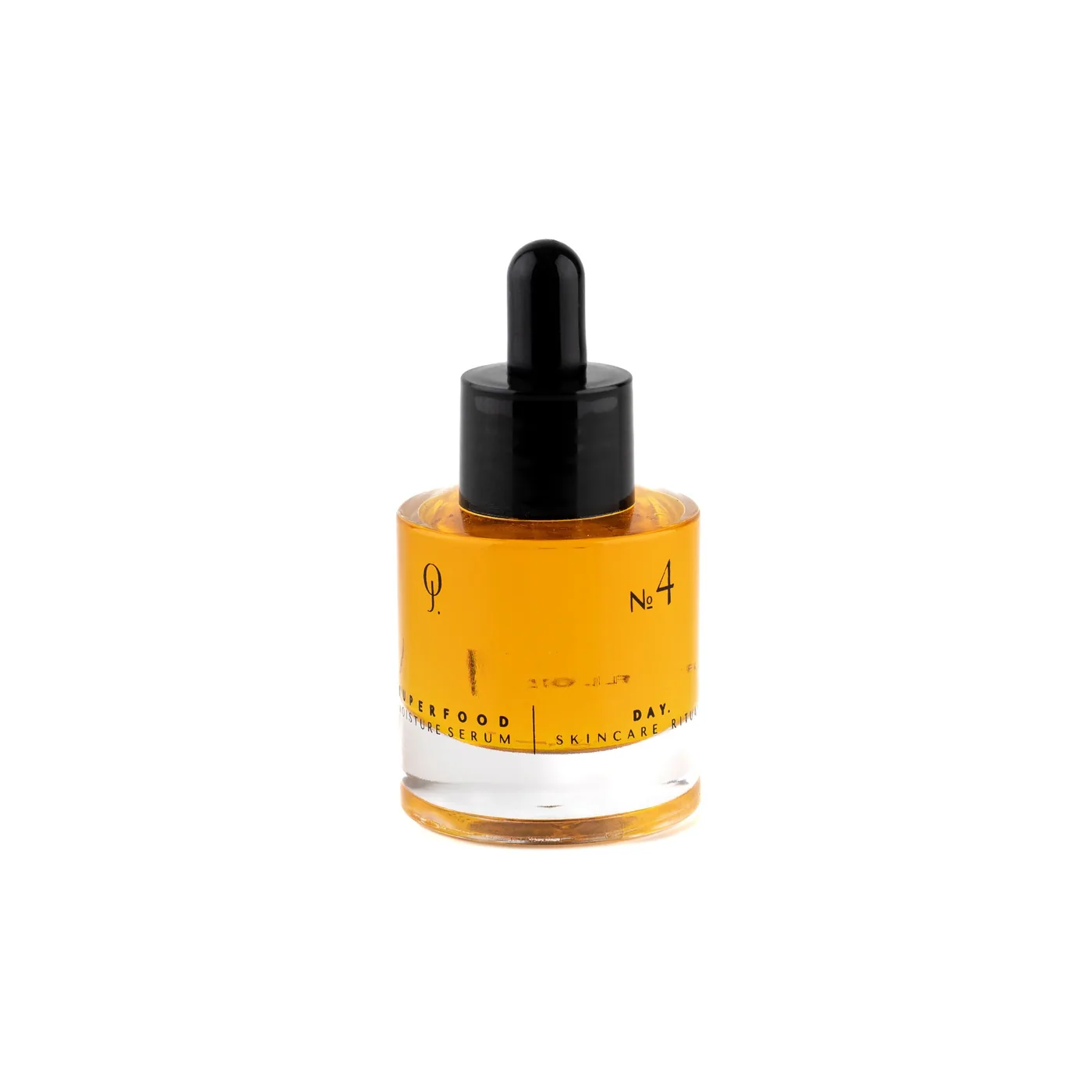
No4. Daily Superfood Moisture Serum
Explore productWhy in an oil
Q10 is fat-soluble, not water-soluble. In a water-based formula it is harder to work with and would not reach where it should. An oil base is its natural environment — and it does the other half of the serum's work: softening the surface of the skin and reducing moisture loss.
That is why Q10 is in No4. Daily Superfood Moisture Serum rather than in a toner or a gel. The order of the steps follows from it: an oil serum comes after the water-based layers, because it spreads over them more easily than the other way round.
Why a percentage means nothing on its own
Concentrations are often quoted as though the number were a mark of quality. On its own it is not. One per cent of a well-formulated, stabilised ingredient in an oil that spreads well does more for skin than three per cent in a base where the ingredient falls apart within weeks.
Our day serum contains Q10 at one per cent. We state it because it is something a customer can check and compare — not because a higher number would automatically mean a better serum.
- Ubiquinone — coenzyme Q10 in the INCI
- Fat-soluble, hence the oil base
- Morning, as the fourth step, always with SPF on top