Actives
AHA and PHA acids
Glycolic acid · Lactic acid · Gluconolactone
Three acids, three molecular sizes — and one decisive difference: do they stay on the skin, or rinse away?
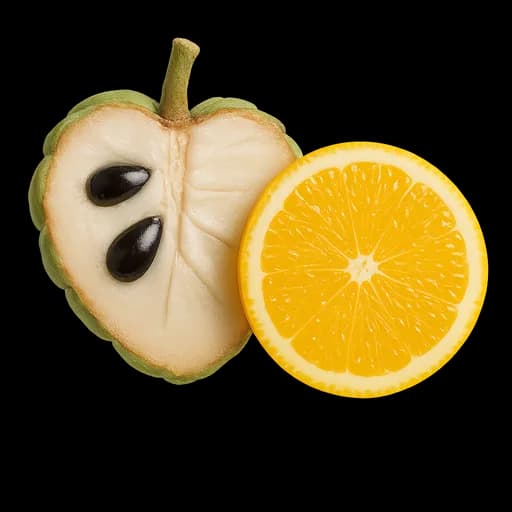
AHA and PHA cover a group of acids that help loosen dead cells at the skin's surface. Our No1. contains three: glycolic acid, lactic acid and gluconolactone. Glycolic occurs naturally in sugar cane, lactic is produced by fermenting sugars, and gluconolactone by oxidising glucose.
They differ in molecular size, and that governs their character. Glycolic has the smallest molecule of the AHAs, making it the most penetrating and also the sharpest. Lactic is larger and gentler, and binds water besides. Gluconolactone belongs to the PHAs — polyhydroxy acids — whose molecule is large enough to act mainly at the surface, and which tend to be the best tolerated of all.
The most important difference, though, is not between the acids but between a product that stays on the skin and one that is rinsed off. An acid serum acts for tens of minutes and is an intervention to be handled carefully. A rinse-off emulsion has tens of seconds, which is another league entirely — and that is exactly why it suits skin for which leave-on acids would be too much.
This distinction is the one most often lost in skincare writing, and it lies behind a great many damaged barriers. Aggressive exfoliation looks good in the short term: the surface is smoother, the skin has a sheen. The weakened barrier answers later — with sensitivity, redness and, paradoxically, a worse appearance than at the start.
So our acids sit in the No1. Two Phase Cleanser, a product that is rinsed away, in the company of rice and coconut cleansing amino acids, chlorophyll and botanical extracts of soapwort, centella and ginkgo. Cleansing is the first step of the ritual and ought to be the gentlest point of the whole routine: if skin feels tight after washing, the problem starts here and no serum above it will fix that.
- Role in the formula
- Exfoliating ingredients
- Origin
- Glycolic acid occurs naturally in sugar cane, lactic acid is produced by fermenting sugars and gluconolactone by oxidising glucose.
