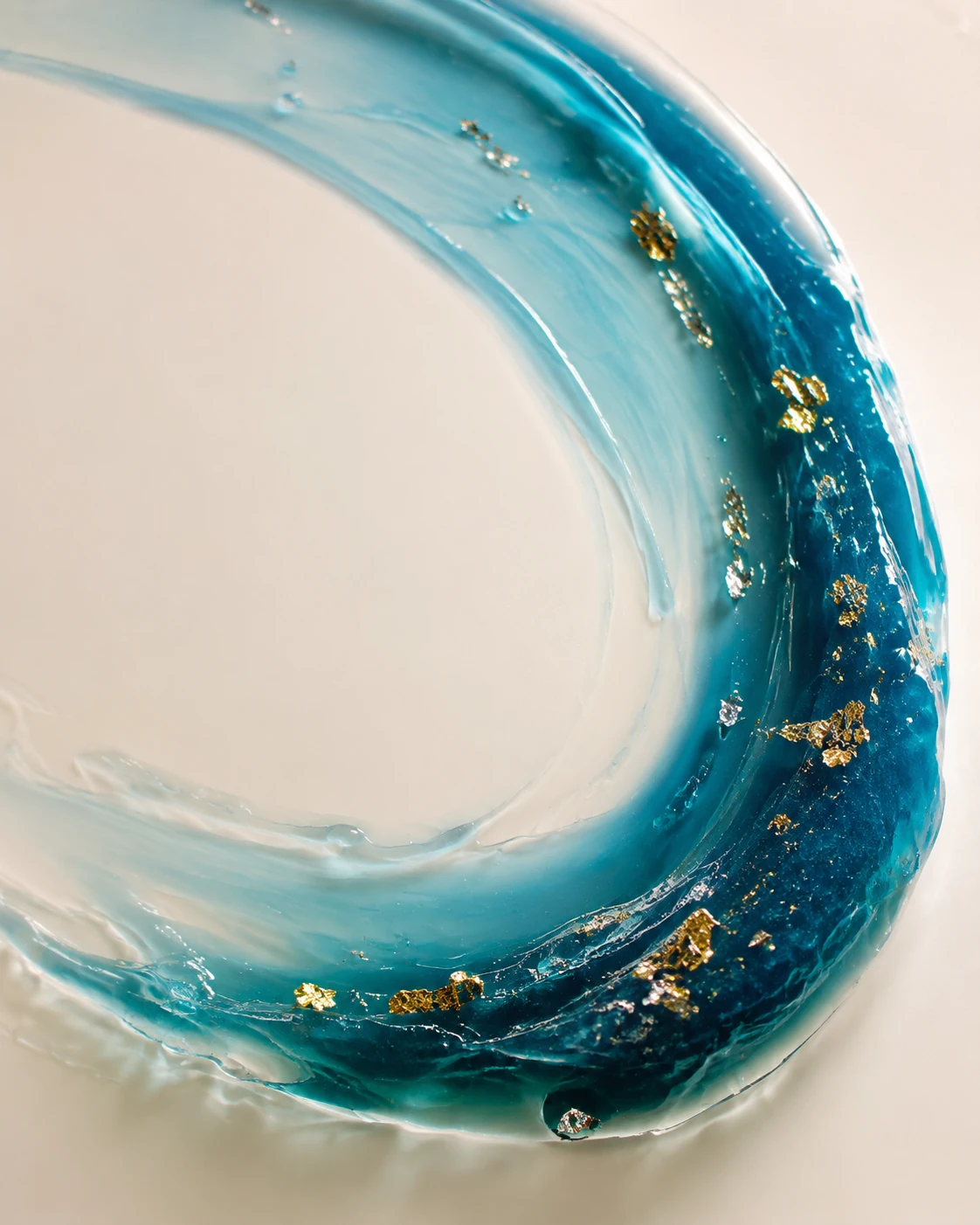
When a gold flake appears in a dark balm, the eye finds it before the name of bakuchiol or a vitamin derivative. Gold has thousands of years of cultural history behind it. We associate it with permanence, power, jewellery and ceremony. Cosmetics did not invent that meaning; they simply placed it in a jar.
That is precisely why it deserves an accurate description. Gold can contribute to a product’s visual and sensory character. This does not automatically mean that it ‘regenerates cells’, transfers energy, detoxifies or carries other ingredients deep into the skin.
What 24 carats means
For precious metals, carats describe purity, not particle size or cosmetic effect. Twenty-four carats indicates very high gold purity. To use that description for a particular cosmetic raw material, however, it must match the supplier’s documentation. A golden colour alone is not enough: some pigments look metallic without containing any gold.
Real gold usually appears in the INCI list as Gold. It can take different forms in a product: fine particles, flakes or part of a decorative dispersion. Public descriptions should reflect the exact raw material in No4. Night, rather than a general idea of gold in cosmetics.
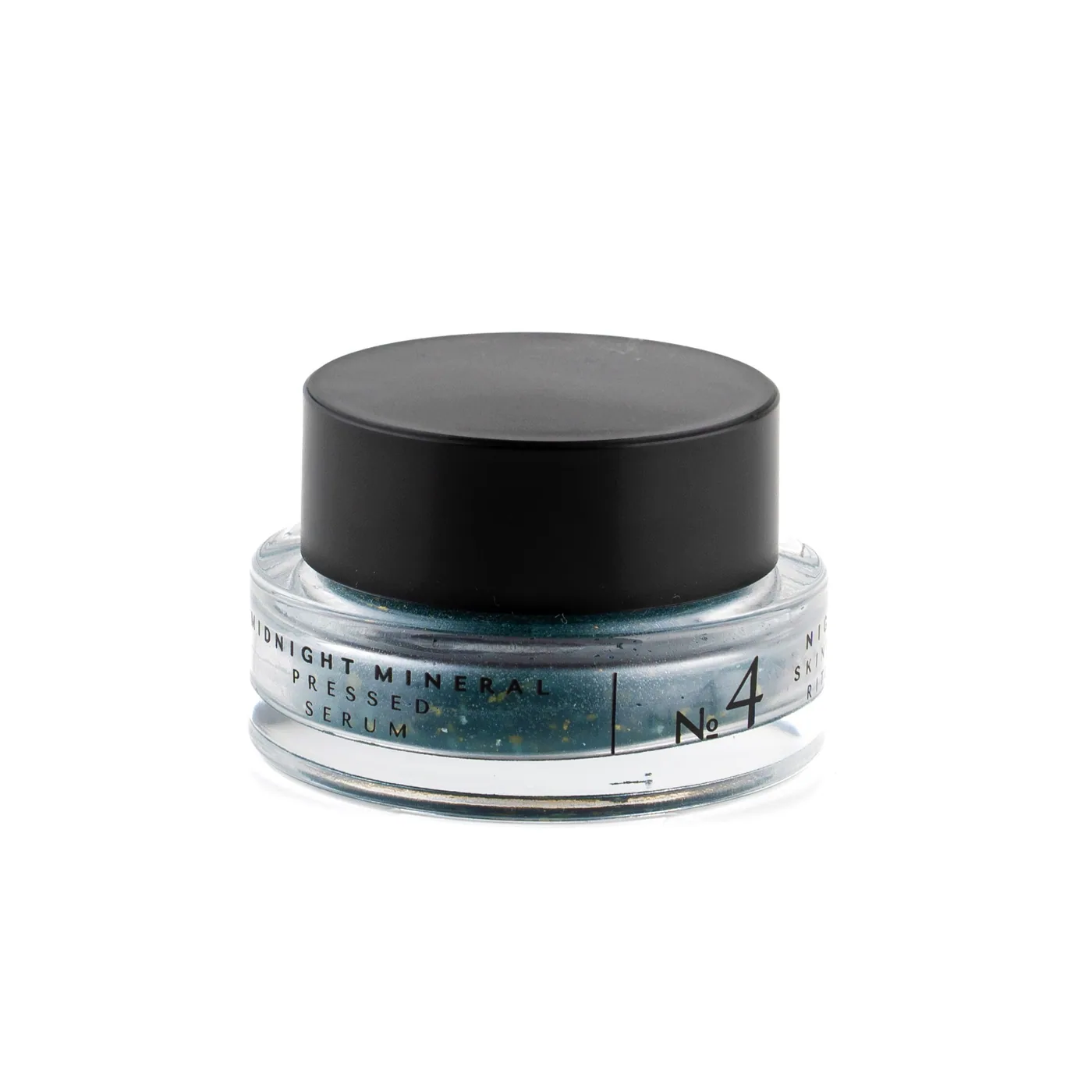
No4. Midnight Mineral Pressed Serum
Explore productThe immediate effect is mainly visual
A visible flake turns taking a little balm into a small occasion. As it spreads, the particles disperse through the oil layer and the shimmer may almost disappear on the skin. That is not a failure. Its purpose need not be to create a highlighter; it may be a detail most noticeable when opening and applying the product.
Sensory effects are sometimes undervalued in cosmetics, as though anything that is not a clinical measurement were worthless. Yet a product someone enjoys using is more likely to become a regular part of their routine. Aesthetics earns credibility when it does not pretend to be medicine.
The balm’s base determines the result
The supple feeling after night care comes mainly from the complete lipid composition: oils, emollients, waxes and other ingredients that create a smooth film. Bakuchiol, a vitamin C ester or other antioxidants can complement cosmetic care for the skin’s appearance when they are actually present in the formula.
Gold is the signature of such a formula, rather than its supporting structure. Comparing it to a crown only works if we openly acknowledge that the building stands without it.
Mineral does not mean non-reactive
Metals are often treated as inert in discussions of sensitivity, but contact allergies to metals exist. A reaction to a finished cosmetic product may also be unrelated to its gold: fragrance, a preservative or another ingredient could be responsible. Anyone with a confirmed gold allergy or repeated reactions should discuss the complete INCI list with a dermatologist.
This is not a reason to fear every golden particle. It is a reminder that ‘luxurious’, ‘natural’ and ‘mineral’ are not safety categories.
How to describe luxury without an apology
A brand does not need invented biology to justify gold. It can say:
- it is a visual detail,
- it underlines the product’s evening character,
- it creates a moment of surprise during application,
- it complements the balm’s mineral and dark blue aesthetic,
- the whole formula does the main cosmetic work.
That explanation does not diminish its value. Quite the opposite. Mature luxury does not need to pretend that every beautiful element is clinically essential.
Perhaps this is the most interesting part: gold in night care can be beautiful while retaining its real identity, without being given abilities it does not possess.
When luxury is measured in attention
Gold in a balm changes the moment of application before it can change anything else. Small reflections catch the light, the texture melts in the palm and an ordinary final step takes on a more ceremonial rhythm. That is valuable. If a brand acknowledges that this is primarily a sensory and visual element, it need not turn it into a dermatological miracle.
Transparency separates beautiful luxury from an empty promise. The user should know whether gold particles remain visible after application, how subtle the final effect is and whether they can transfer to textiles. Photographs should show the actual texture in daylight, rather than only a dramatic heap of metallic flakes in close-up.
Metal purity and the amount used in a formula are two different pieces of information. The term 24k describes the high purity of the gold used; it does not tell you how much the product contains or what cosmetic effect the finished formula has demonstrated. An expensive raw material does not, by itself, guarantee a more effective balm either.
Sensitive skin is entitled to be sceptical even about expensive ingredients. If a product causes itching, burning or swelling, its aesthetic value is no argument for continuing. Luxury should mean precision, a thoughtfully developed formula and an honest description of the experience, rather than an obligation to tolerate a product because it contains a rare material.
A small amount and good light are helpful when using a product with gold particles. Spread it between your palms first and apply a thin layer before considering more. You will be better able to see whether the reflection is subtle or too noticeable for you. A sensory detail should complement the ritual, not outweigh skin comfort.
Explore 24k gold in the ingredient atlas