Bakuchiol shows how much the cosmetic world loves comparisons. A new or less familiar ingredient is easier to introduce as the botanical version of something famous. Customers immediately know where to place it. But that clarity comes at the cost of oversimplification.
Bakuchiol is a plant-derived molecule historically associated mainly with seeds of Psoralea corylifolia, also botanically known as Cullen corylifolium. Retinol is a form of vitamin A. Their chemical structures differ, and bakuchiol does not turn into retinol in skin. Natural retinol is therefore not an accurate ingredient name.
Why compare them in the first place?
Laboratory and cosmetic research suggested that bakuchiol may influence some biological processes associated with the appearance of photoageing despite its different structure. The most cited clinical study compared topical bakuchiol with retinol in 44 participants over twelve weeks. Bakuchiol was used twice daily and retinol once daily. Both groups improved in the measured signs of photoageing; less scaling and stinging were reported with bakuchiol.
That is an interesting result, not a final verdict. The study was small, lasted three months and compared particular regimens and concentrations. It does not say every bakuchiol product will behave alike, nor that bakuchiol replaces dermatological retinoids or has been studied as extensively.
An ingredient's name does not work alone in cosmetics. Concentration, stability, vehicle, packaging, the whole formula and consistency of use matter. Without finished-product data, a brand should discuss its cosmetic role more cautiously than the abstract of one study might suggest.
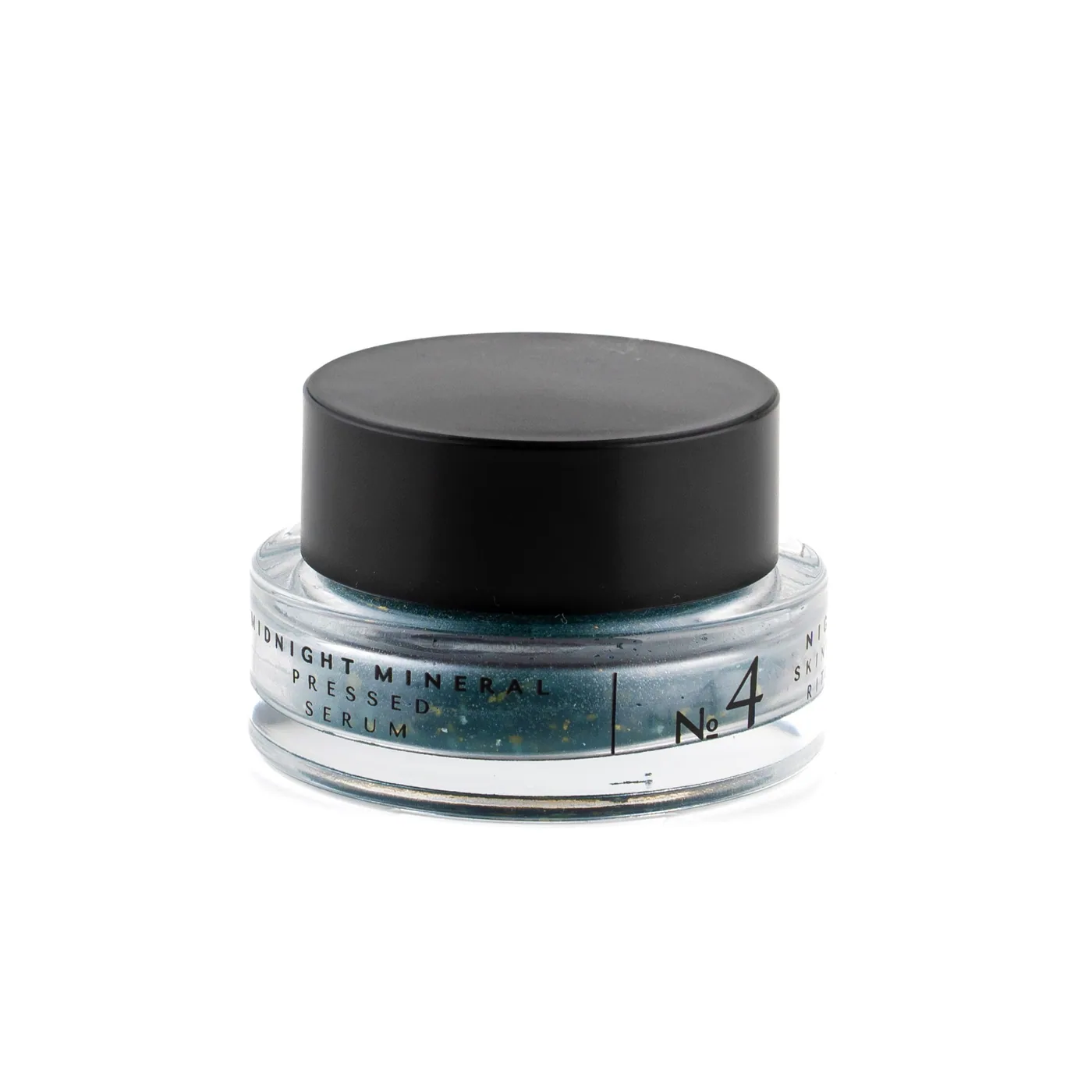
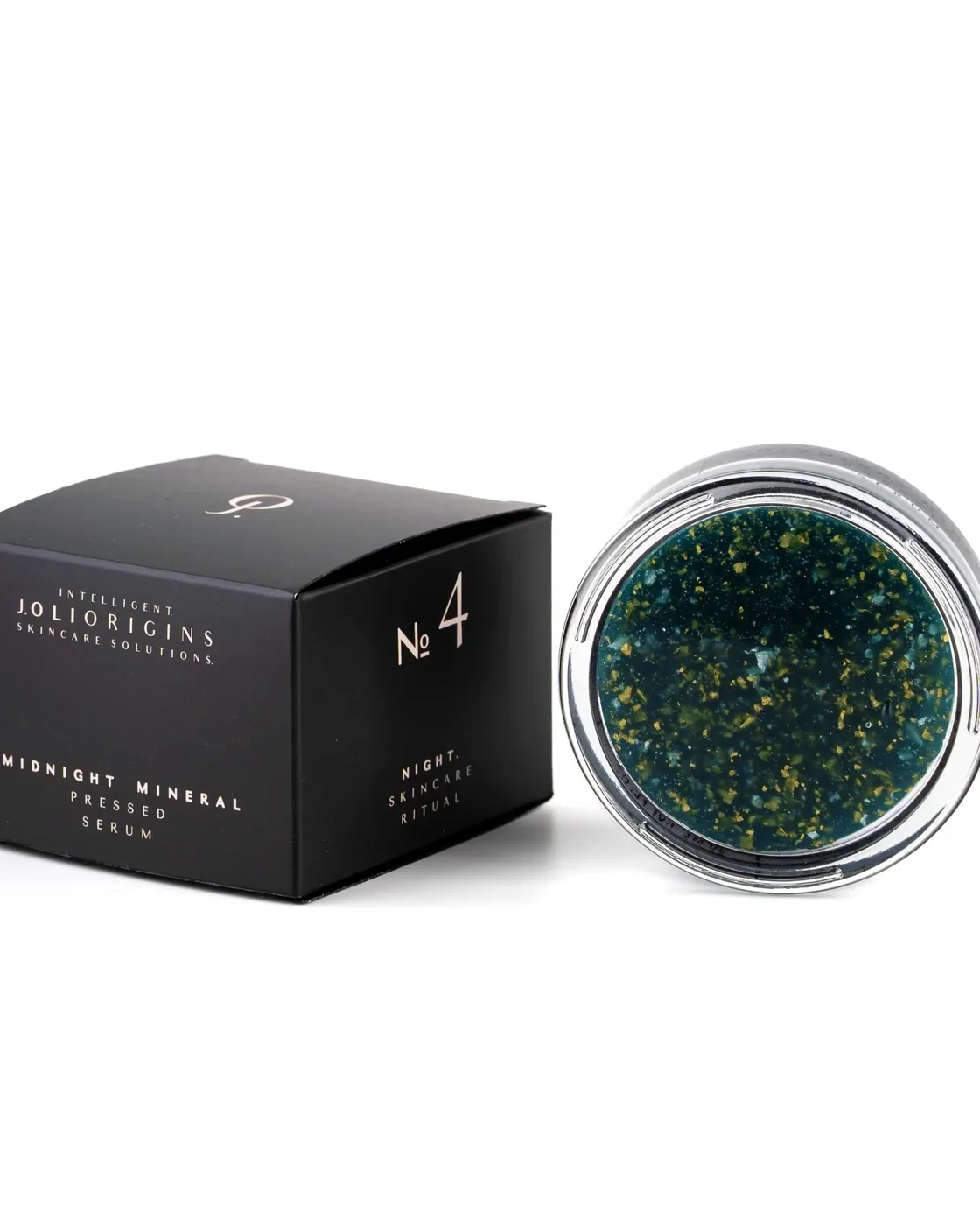
No4. Midnight Mineral Pressed Serum
Explore productGentler does not mean risk-free
People who did not tolerate retinoids often seek bakuchiol. Some studies and experience suggest good tolerability, but botanical origin does not guarantee freedom from irritation or allergy. A reaction can come from bakuchiol itself or another part of the product: fragrance, preservation or the oil base as a whole.
For sensitive or reactive skin, try the product on a small area first and introduce it on its own. Changing cleanser, toner, serum and balm together makes any reaction difficult to attribute reliably.
Claims that bakuchiol is automatically safe in pregnancy also need caution. Not being a retinoid does not prove a particular product safe for every pregnant or breastfeeding woman. Discuss the question with a doctor and the brand's responsible person, with the full ingredient list available.
Why it suits an evening balm
Bakuchiol dissolves in the oil phase, making oil serums and balms natural formulation choices. Evening use can be pleasant because of the richer texture and simple ritual, not because the molecule reads the clock. Unless directed otherwise, some bakuchiol products can also be used in the morning; daytime care still finishes with separate sunscreen.
In No4. Night, bakuchiol is one part of a wider composition. Oils, waxes, emollients, antioxidants, scent and application also create the final feel. Saying it contributes to care for a smoother, more even-looking complexion is more honest than building a story around one miraculous molecule.
Recognising a good explanation of bakuchiol
A trustworthy explanation:
- clearly states that bakuchiol is not retinol,
- does not treat botanical origin as automatic proof of safety,
- describes the limits of available studies,
- does not transfer results from one concentration to every product,
- does not promise treatment of acne, pigmentation or skin disease,
- explains the role of the whole formula.
An unreliable explanation promises all the power of retinol without a single drawback, guarantees results within days or treats laboratory research as proof for any drop containing bakuchiol.
Bakuchiol need not be retinol dressed in green. Its difference is what makes it interesting and allows a mature discussion where promising research does not have to masquerade as certainty.
Patience belongs in the formula, even if not in INCI
Cosmetic stories favour a quick turning point: the first evening, the first morning, instantly smoother skin. One application can indeed change softness and shine by altering the surface and its reflection of light. That differs from a lasting change in the appearance of fine lines. With bakuchiol, assess consistent use over weeks rather than changing half the routine in the meantime.
Photographs can help if taken in the same light and angle without filters. More practically, notice whether the product stays comfortable, does not increase sensitivity and fits a routine you actually maintain. One bad day after little sleep or sun exposure is not a verdict on the ingredient. One flattering light is not a clinical result either.
Bakuchiol is sometimes presented as natural retinol without drawbacks. That is too convenient. It is another molecule with its own research, formulation and tolerability. Comparative studies are interesting but do not establish that every product uses the tested concentration and vehicle. The finished formula, stability and use decide the result.
If you also use dermatologist-prescribed treatment, many active products, or are pregnant or breastfeeding, do not infer safety from botanical origin alone. Discuss the full ingredients and your particular circumstances with an appropriate professional.
Remember the base that stays the same with any new evening product: gentle cleansing, hydration suited to your skin and daytime sun protection. If a routine irritates or you repeatedly get sunburnt, another active is no shortcut to smoother-looking skin. The whole routine must work first.