Cold-pressed oils
Maqui berry seed oil
Aristotelia chilensis seed oil
A Patagonian berry made famous by anthocyanins. The seed oil, though, is a different material from the juice.
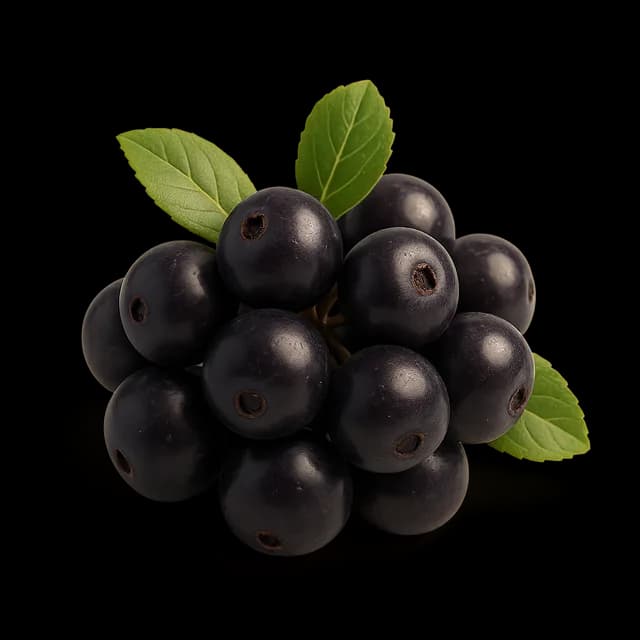
Maqui, Aristotelia chilensis, grows in Chilean Patagonia and has a long tradition among the Mapuche people there. It reached wider attention as a so-called superfruit for its anthocyanins — the deep purple pigments the fruit juice is rich in.
Skincare, however, uses the oil cold-pressed from the seeds, which is a different material. Anthocyanins are water-soluble, so they do not carry over into an oil phase; seed oil offers fatty acids, not pigments. It is a distinction descriptions often blur, and a pity — maqui seed oil has qualities of its own and need not borrow the juice's fame.
Those qualities lie in the fatty acid profile. Maqui is rich in unsaturated acids including linolenic, which gives it a light, quickly absorbed character and a faint fruity note. It also means it is prone to oxidation and needs antioxidant company in a formula — in our case natural vitamin E, the vitamin C ester and gamma oryzanol.
That is the general rule for rare oils. The more interesting the profile, the more fragile the material. An oil meant to last needs protection around it, and a product made in small batches after an order has one advantage over mass production: it reaches the customer young.
In our range, maqui oil is in the No4. Midnight Mineral Pressed Serum as the lighter part of the oil composition — a counterweight to the denser pequi. Beside them the balm carries oils of Kakadu plum, cacay, cucumber and prickly pear, with floral waxes of jasmine and damask rose.
- Role in the formula
- Softening and nourishment
- Origin
- Patagonia, Chile; cold-pressed from maqui berry seeds.
- Character
- A light, fast-absorbing oil with a faint fruity tone.
