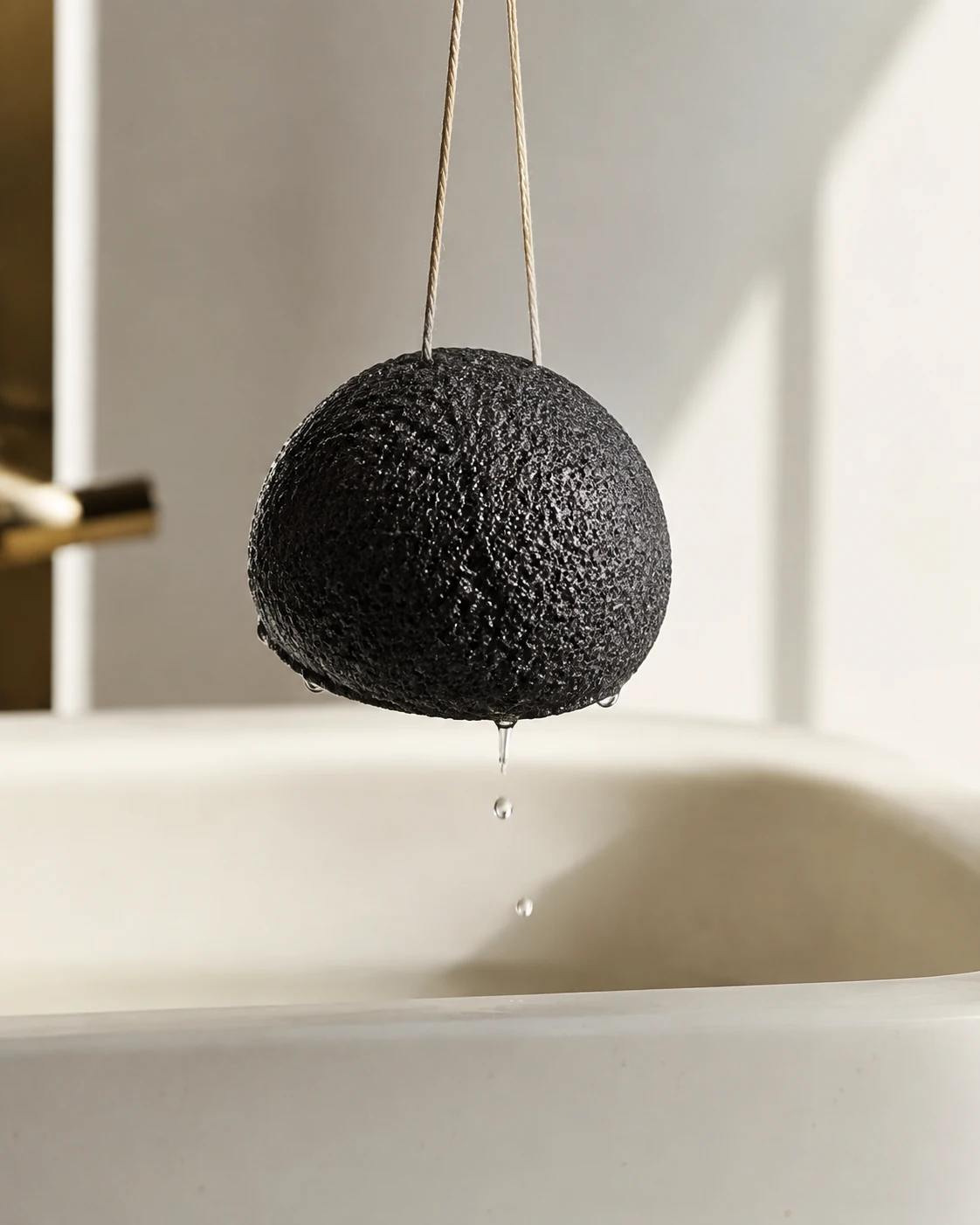
The first encounter can be unconvincing. You unwrap a hard, shrunken disc and are supposed to wash your face with it. The transformation happens in water: porous fibres soak it up, the sponge expands and softens. That change explains why you must never use it dry.
Konjac comes from Amorphophallus konjac, a plant traditionally used in food and gel-like materials. In a sponge it forms a fine fibre network that mechanically helps spread cleanser and carry away loosened impurities. Strong pressure is unnecessary; rough handling only increases friction and shortens its life.
Before the first use
Immerse the sponge in clean lukewarm water and let it soften fully according to the manufacturer's directions. Gently squeeze it underwater several times. Do not twist it or try to speed things up by crushing a hard centre. Any firm area needs more soaking time.
Apply cleanser to the skin or a small amount to the wet sponge. Circular movements should be light, without scrubbing. Only use it around the eyes if the cleanser's instructions permit this, and always without pressure.
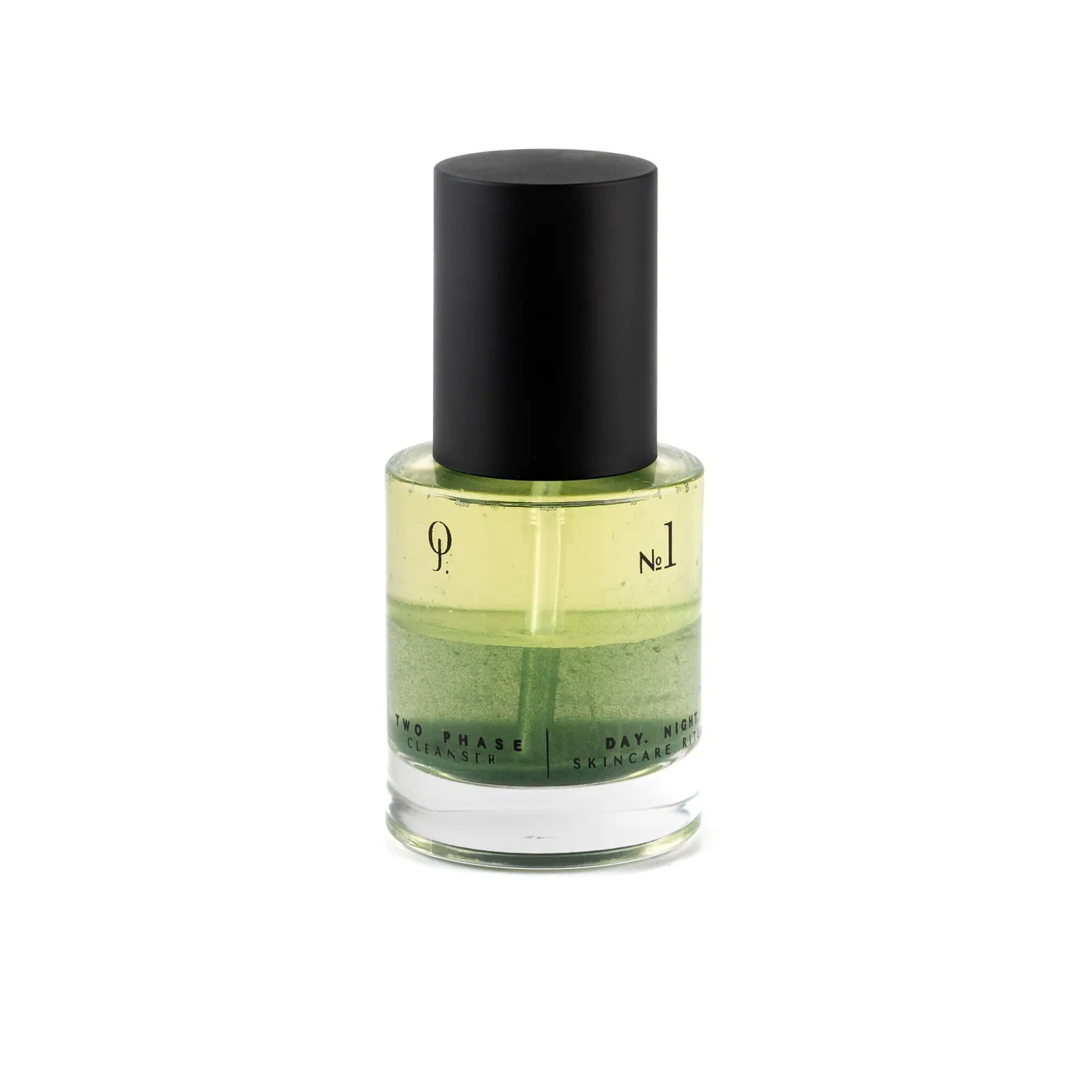
No1. Two Phase Cleanser
Explore productThirty seconds after cleansing can determine weeks of use
After every use, rinse the sponge thoroughly with clean water until foam and coloured residues are gone. Press water out between your palms. Twisting damages fibres and eventually causes tears.
Then hang it or place it somewhere ventilated where all sides can dry. A shower floor, wet dish or closed cosmetic bag creates exactly the environment to avoid. The sponge repeatedly gets wet in use, and natural does not protect it from microbial contamination.
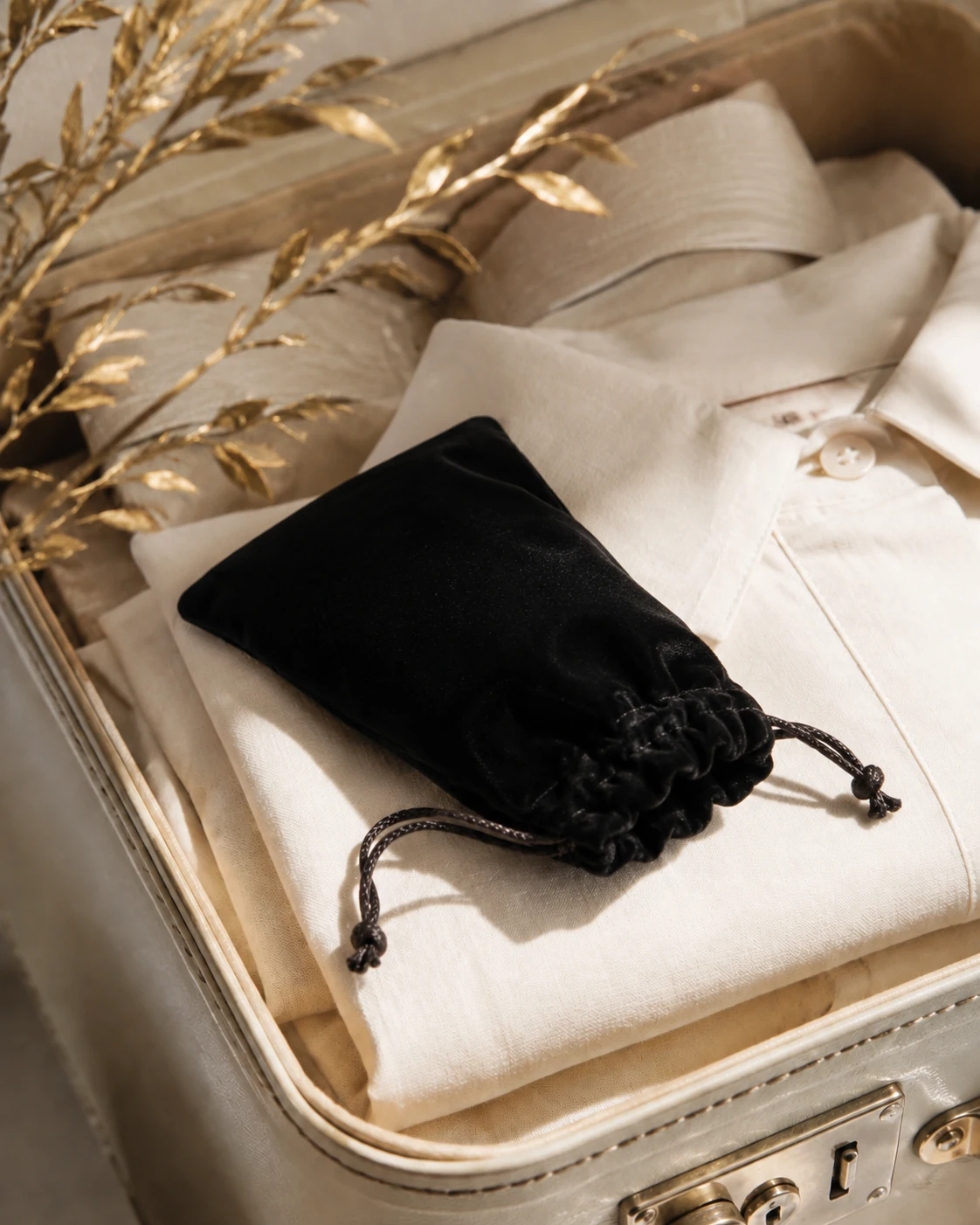
In a poorly ventilated bathroom, drying it outside the shower may be more practical. When travelling, pack it only once thoroughly dry. If that is impossible, rinse it again on arrival and expose it to air.
Bamboo charcoal does not make it sterile
The black sponge is enriched with bamboo charcoal. Colour and an added material may affect the product's character, but do not replace hygiene. Detoxification stories or lasting antibacterial claims do not replace rinsing, drying and regular replacement.
Nor is the sponge a daily exfoliator requiring pressure to work. Its mechanical effect is gentle, but even gentle friction can trouble an irritated barrier. Put it aside for active eczema, painful acne, injury or marked redness and discuss your approach with a professional.
When to replace it
The calendar is only a guide. Replacement depends on frequency, drying and the particular sponge's construction. Look at the material:
- it begins to crumble or tear,
- it is no longer evenly springy after soaking,
- it remains permanently misshapen,
- its smell changes,
- discolouration will not rinse away,
- it has stayed damp in a closed container for a long time.
Do not try to rescue it by boiling, microwaving or harsh disinfection unless the manufacturer explicitly recommends this. Heat may damage the material, and a home experiment does not guarantee a safe result.
What about composting?
Konjac fibre is plant-derived, but compostability of the finished sponge also depends on additives, dyes, its hanging string and manufacturing. Compost it only if the particular manufacturer confirms that it is suitable. Natural does not automatically mean certified compostable.
A well-kept sponge need not be treated as a precious bathroom artefact. It is a consumable tool. Use it while clean, springy and intact, then let it make way for a new one without guilt.
The sponge keeps its own small diary
Konjac changes during use, and these changes are more useful than a precise date. A new soaked sponge swells, feels springy and has an even surface. Gradually it may soften, lose shape or crumble at the edges. Once it cracks, smells unpleasant even after thorough rinsing or stays suspiciously slimy, extending its life at any cost is not economical.
The drying place makes a big difference. A bath edge, closed jar or humid shower may look convenient but slows drying. Airflow away from direct contact with wet surfaces is better. The string is for hanging, not for pulling sharply from a hardening sponge. When travelling, avoid sealing it damp in an airtight bag; dry it as thoroughly as possible first and hang it again on arrival.
A sponge is not a shared family tool. Sharing transfers sebum, cosmetic residues and microorganisms. It is also unsuitable for irritated, injured or freshly sunburnt skin. Softness does not mean pressure can be ignored: repeated strong friction irritates mechanically even with a soft sponge. Light gliding serves skin better than trying to erase its texture.
Use need not be daily. Some people appreciate it several times a week, others only when removing richer layers. Exfoliating acids, retinoids and mechanical scrubs can add further sources of irritation. Treat konjac as an optional aid to gentle cleansing, not a compulsory step without which skin cannot be clean.
Explore No1. Two Phase Cleanser