Botanical extracts
Edelweiss extract
Leontopodium alpinum flower/leaf extract
A plant that survives where the sun is harshest. Not romance — the reason it gets studied.
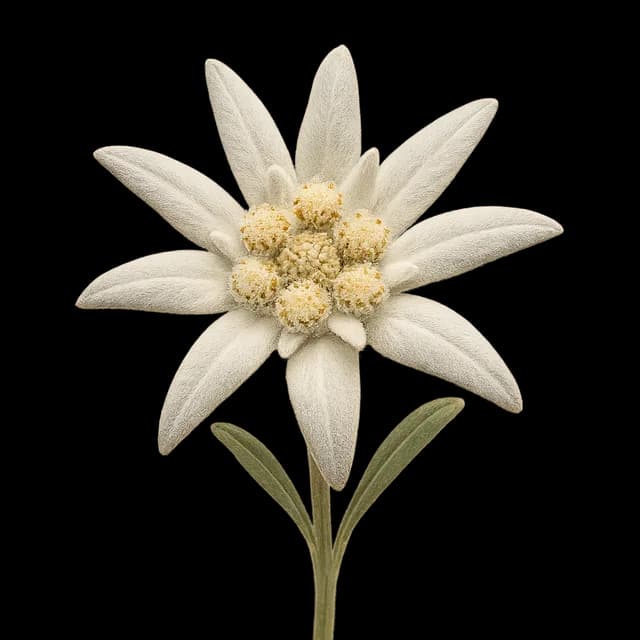
Edelweiss, Leontopodium alpinum, grows high in the Alps, in places of intense ultraviolet radiation, wide temperature swings and dry air. Plants in such conditions build protective compounds of their own — and that is why edelweiss is studied in skincare.
The extract comes from the flowers and leaves. It contains phenolic compounds with antioxidant properties, among them substances named after the plant itself. In skincare it counts as a botanical conditioning ingredient, rounding out a composition rather than carrying it alone.
One note belongs here about alpine plants, and it is only decent to state it: edelweiss is protected in the Alpine countries and wild collection is prohibited. Material for cosmetics comes from controlled cultivation, not from the mountains. Anyone claiming otherwise is either not telling the truth or doing something they should not.
In a formula, botanical extracts behave differently from isolated actives. They cannot be dosed by percentage of effect, and their composition varies with the season and the site, rather as wine does. So they enter a formula as part of a botanical composition, where individual extracts complement one another, and not as the single load-bearing element.
In the No2. Bioactive Toner, edelweiss sits in exactly such a composition, alongside cornflower, mallow, tremella and butterfly pea. NMN, plant collagen and fermented lactobacilli work beside them. The toner is the second step of the ritual, and its task is to leave the skin damp and ready for the serum.
- Role in the formula
- Botanical conditioning
- Origin
- Flowers and leaves of edelweiss, a plant of high Alpine elevations.
